How to Remove a Stripped Screw with a Cordless Drill: A Step-by-Step Guide
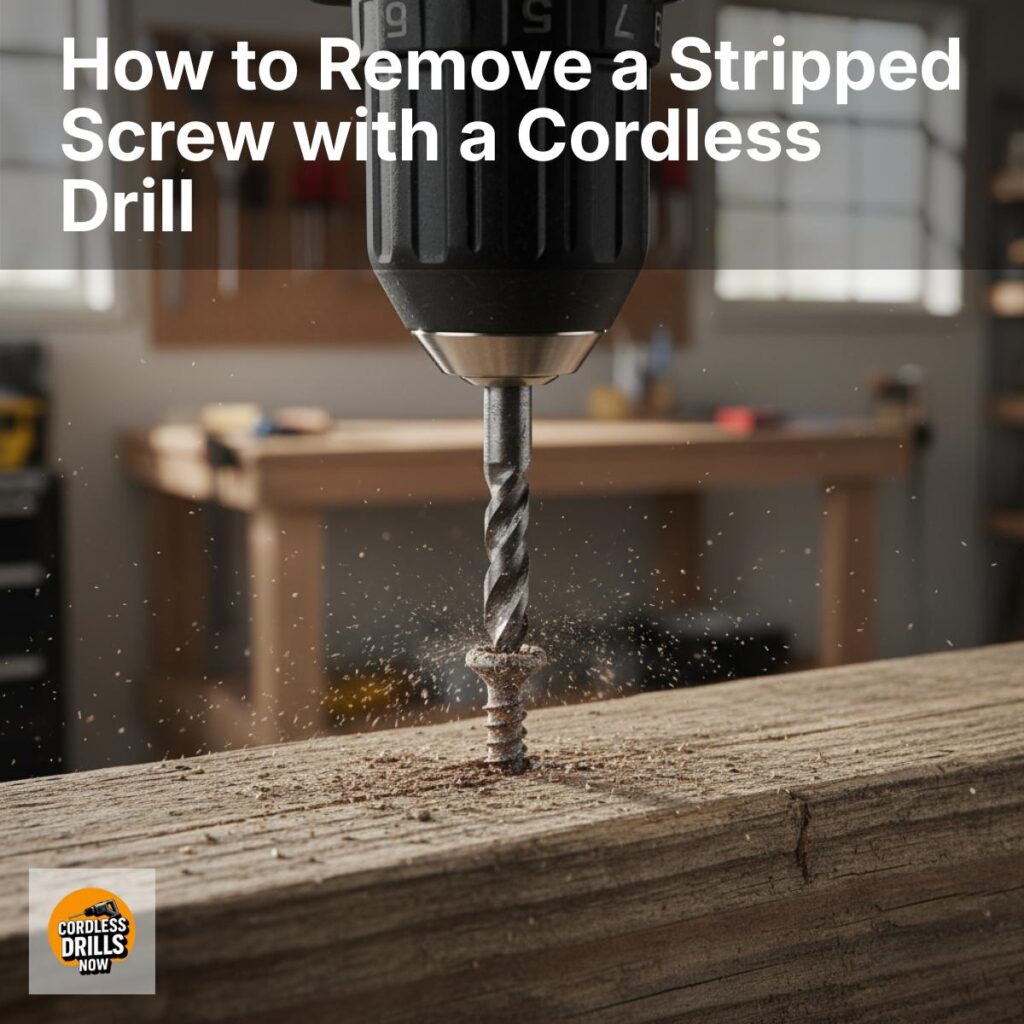
<p>A stripped screw can stall a project and test patience. Using a cordless drill to extract a damaged screw is a practical and efficient solution when the right technique is applied. This guide walks you through a clear, step-by-step process to maximize your chances of a clean, successful removal while protecting the surrounding material.</p><p>Step 1: Assess the situation<br>- Inspect the screw head to determine how severely it’s stripped. Common issues include rounded slots, missing Phillips or flat-head recesses, or a damaged Torx/ security bit.<br>- Check the material around the screw for splinters or cracking. If the surrounding material is soft or fragile, proceed with extra care to avoid further damage.<br>- Gather tools: cordless drill, screw extractor kit (optional but helpful), a screw set or various bit sizes, locking pliers, a center punch, penetrating oil, and safety glasses.</p><p>Step 2: Prepare the area and tools<br>- Put on safety glasses to protect your eyes from flying debris.<br>- If the screw head is recessed, apply a small amount of penetrating oil around the head and allow it to seep in for a few minutes. This can loosen rust or debris that contribute to stripping.<br>- Select the appropriate approach depending on the condition of the screw head (slotted, Phillips, Torx, Allen, or a nut/bolt head).</p><p>Step 3: Use a drill bit to create a recess (for damaged Phillips/flat-head)<br>- For a compromised cross-slot or flat-head, switch to a slightly smaller flat or Phillips bit that can bite into the remaining material without slipping.<br>- Align the bit perpendicular to the surface to avoid further cam-out.<br>- Gently apply pressure while starting the drill at a slow speed to create a small, deep indentation in the center of the screw head. Stop if the bit binds or bottoms out.<br>- This creates a positive bite area that can be used by a screw extractor or a screw-clearing method.</p><p>Step 4: Apply a screw extractor (if available)<br>- Insert the screw extractor into the freshly created socket. These tools are designed to bite into the screw in the opposite direction of normal threading.<br>- Start with a slow, steady drill, applying consistent pressure. The extractor should grip the screw and back it out in a counterclockwise direction.<br>- If the extractor stalls, stop and assess. Do not force the tool, as that can break the extractor or further damage the screw.</p><p>Step 5: Alternative method—vice grip or locking pliers<br>- If the screw head remains accessible and the shank protrudes, secure the screw with locking pliers (vise-grips).<br>- Clamp firmly just below the head, ensuring a solid grip without distorting the surrounding material.<br>- Slowly rotate the pliers counterclockwise to back the screw out. If the screw begins to twist or slip, apply a small amount of penetrating oil and reattempt with careful, gradual pressure.</p><p>Step 6: Drill out and replace (last resort)<br>- If all extraction attempts fail, you may need to drill out the screw. Use a drill bit slightly smaller than the screw’s minor diameter and drill straight into the center.<br>- Stop when the material around the screw is no longer compromised. Afterward, replace with a new screw of the correct size and thread type.<br>- Pre-drill a pilot hole for the replacement to reduce the risk of future stripping.</p><p>Step 7: Prevention tips for future projects<br>- Use quality screws and appropriate lubricants or anti-seize compounds for metal-to-metal connections.<br>- Avoid over-tightening. Consult fastener torque specifications when available.<br>- Apply a light dab of wax or soap to reduce friction for stainless or hard metals during installation.<br>- Consider using screw extractors or impact-rated bits for high-torque applications.</p><p>Conclusion<br>Removing a stripped screw with a cordless drill combines preparation, careful technique, and the right tools. By following these steps, you can recover a project without damaging the surrounding material and set up for a secure, properly seated replacement fastener.</p><p><a href="https://www.cordlessdrillsnow.com/how-to-remove-a-stripped-screw-with-a-cordless-drill-a-step-by-step-guide/">Source</a></p>


Comments
Post a Comment